
Coach Jarryd asks CrossFit Valley Road member Jared Petzer what every beginner should know before starting their triathlon journey
If you’ve ever watched a triathlon or Ironman in Gqeberha and thought, “I’d love to try that, but I wouldn’t even know where to start,” you’re certainly not alone.
As coaches at CrossFit Valley Road, we regularly see people discover new challenges once they have built a solid foundation of fitness.
For some, that’s their first 5km.
For others, it’s a running event, cycling challenge or ocean swim.
And for some, it becomes the much bigger challenge of completing a triathlon, Half Ironman or eventually a Full Ironman.
That’s why I wanted to speak to Jared Petzer, one of our long-standing CrossFit Valley Road members.
Jared has been part of our community for 14 years. During that time, he has continued to develop his fitness through CrossFit while also exploring swimming, cycling, running and multi-sport racing.
His endurance journey has now included 6 Half Ironman finishes and 3 Full Ironman finishes.
So I asked Jared 20 powerful questions aimed at someone who may be sitting in Gqeberha right now thinking:
“Could I actually do a triathlon?”
We talk about how he got started, what he wishes he knew earlier, how much training is really required, where beginners can train, what equipment they actually need, how CrossFit has helped him, how he balances training with everyday life, and what he would tell someone who wants to start today.
This isn’t a story about becoming an elite athlete.
It’s about how an everyday person can start somewhere, build fitness over time, and eventually take on challenges that once seemed impossible.
Meet Jared Petzer
Jared has been a member of CrossFit Valley Road for 14 years.
Before triathlon became a major part of his sporting life, he had already spent years enjoying different forms of exercise and competition.
Swimming.
Cycling.
Running.
CrossFit.
Eventually, curiosity and a desire to challenge himself led him into multi-sport racing.
Today, he has completed:
- 6 Half Ironman events
- 3 Full Ironman events
- Ocean swimming races
- Road cycling races
- Running events ranging from 5km to 21km
That makes Jared’s story particularly useful for someone starting out.
He hasn’t only trained for one discipline.
He’s experienced what happens when strength and functional fitness have to work alongside swimming, cycling and running.
📸 Jared training at CrossFit Valley Road
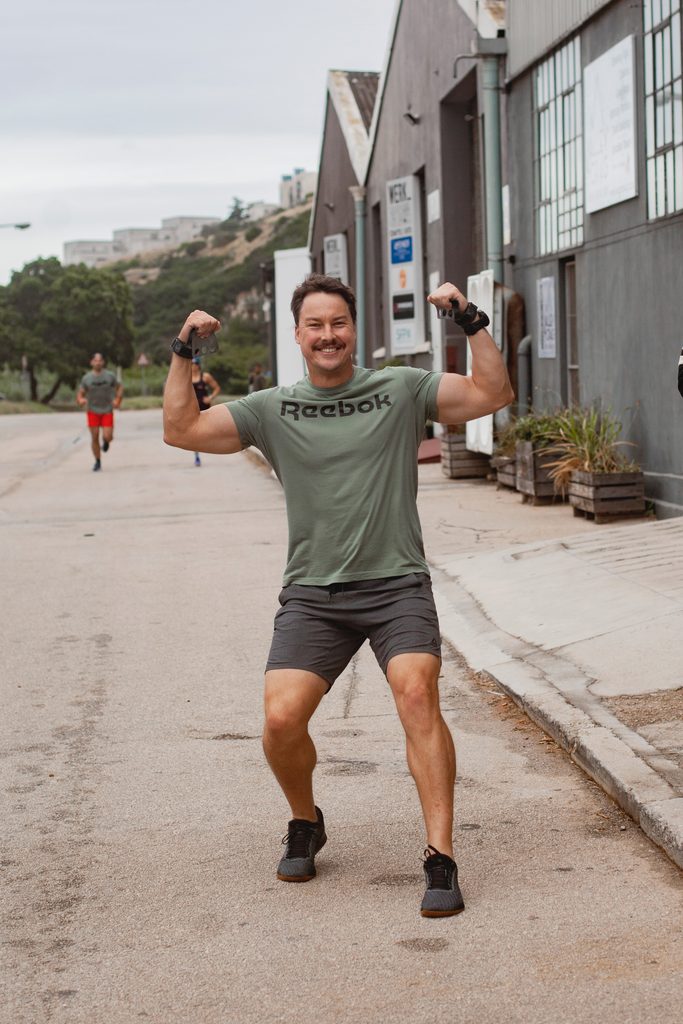
CrossFit Valley Road member Jared Petzer has combined 14 years of CrossFit with swimming, cycling and running to complete 6 Half Ironman and 3 Full Ironman events.
1. Jared, How Did You Get Into Triathlon and Ironman?
Jared’s Answer
“I am a long-standing member at CrossFit Valley Road for 14 years. I have always been into sports, and over the years I have enjoyed testing myself physically (and mentally) in different athletic fields – whether that was swimming in ocean races, cycling in road races, or running 5km / 10km / 21km races.
Curiosity and natural progression then led me to multi-sport racing. Since then, I have completed 6 Half Ironman and 3 Full Ironman.”
Coach Jarryd’s Take
What stands out to me about Jared’s journey is that he didn’t start with Ironman.
There was no need to immediately decide that he was going to become an Ironman athlete.
He already enjoyed being active, had experience in different sports, and gradually became curious about combining them.
That’s a useful lesson for anyone thinking about getting into triathlon.
You don’t need to be a triathlete before you enter your first triathlon.
You simply need to start developing the three disciplines and gradually learn how they work together.
2. What Inspired You to Sign Up for Your First Race?
Jared’s Answer
“Again, curiosity and natural progression, but also peer-pressure. Watching a few of my friends and other local athletes doing these local events created an intrigue and a pull to not only see if I could do it too, but most importantly see whether I would enjoy it. Also, having these events in your backyard made them impossible to ignore, leaving me with no excuse.”
Coach Jarryd’s Take
I think this is something many people can relate to.
Sometimes the biggest barrier isn’t fitness.
It’s simply making the decision to enter.
Having endurance events in your own area makes that decision easier because you can see ordinary people doing them.
And that’s important.
Before worrying about an Ironman, go and watch a local triathlon.
Look at the people taking part.
You’ll quickly realise that there isn’t one specific “type” of person who does triathlon.
3. What Do You Wish You Knew Before You Started Training?
Jared’s Answer
“That aerobic efficiency takes time and patience. Coming from CrossFit, your instinct is to go ‘hard’ every session at high intensity. I had to learn the value of “Zone 2″ training – slow, conversational paces that build endurance to survive race day.”
Coach Jarryd’s Take
This is probably one of the most important lessons for a CrossFit member moving into endurance sport.
CrossFit teaches us to be comfortable with intensity.
Triathlon requires you to become comfortable with not going hard all the time.
Zone 2 training is generally low-intensity aerobic work where conversation remains possible. It helps develop the aerobic system while keeping fatigue relatively manageable.
That doesn’t make it easy.
It requires discipline because you have to resist the temptation to turn every session into a competition.
For someone coming from CrossFit, learning when to push and when to hold back can be just as important as learning the actual swimming, cycling and running skills.
4. What Advice Would You Give Someone Who’s Interested in Triathlon but Feels Intimidated?
Jared’s Answer
“Break it down into bite-sized, manageable pieces – you don’t need to look at the full distance all at once. Focus on one discipline at a time, enter a local short-distance race first, and remember that the triathlon community is very welcoming to beginners. Show up to a local short-course event just to watch, and realize that athletes of all shapes, sizes, and ages are doing this.”
Coach Jarryd’s Take
I completely agree.
One of the biggest mistakes beginners can make is looking at the final destination before understanding the first step.
If you’ve never done a triathlon, don’t start by worrying about an Ironman.
Start by asking:
Can I swim comfortably?
Can I ride a bike safely?
Can I run consistently?
Then:
Can I put those three together?
That’s how you build confidence.
5. Is It Better to Train Alone or With a Group?
Jared’s Answer
“A hybrid approach works best. Group training is essential and invaluable for consistency and safety, especially on bike rides. Group sessions also hold you accountable on those cold winter mornings.
However, solo sessions are crucial for building the mental toughness that you need on race day, especially when you are alone with your thoughts for hours.”
Coach Jarryd’s Take
I like Jared’s “hybrid approach” because both sides have value.
Training with a group provides accountability and social support.
For cycling, it can also provide an important safety benefit.
But endurance events eventually become very individual experiences.
There will be kilometres where nobody can do the work for you.
Learning how to stay calm, pace yourself and keep moving when you’re tired is part of endurance training too.
6. What Triathlon, Cycling, Running or Swimming Clubs Are Available in Gqeberha?
Jared’s Answer
“Gqeberha has a few multi-sport clubs / groups.
I train with Aspire Triathlon Club. They offer structured monthly training blocks. They run dedicated swim squads at the Newton Park Swimming Pool and at Grey High School. They host Friday morning or afternoon sea swims (weather permitting). They also organize group long rides on Saturday or Sunday mornings, usually leaving from Grass Roof or from Wayne Pheiffer Cycles in Summerstrand.”
Coach Jarryd’s Take
This is where having a local member’s experience is particularly useful.
Joining a group can remove a lot of uncertainty when you’re starting.
You can learn from people who have already made the mistakes, bought the wrong equipment, found the good routes and worked out how to fit training into everyday life.
Always check current club schedules and session details directly with the club before attending, as training locations and times can change.
Gqeberha also has the advantage of hosting major endurance events. The official IRONMAN South Africa event is based around Hobie Beach and Nelson Mandela Bay, giving local athletes the opportunity to train and race in the same environment.
7. Where Are Your Favourite Places to Swim, Cycle and Run in Gqeberha?
Jared’s Answer
“Swim – Anywhere along the main beachfront – from McArthur Pool and Leisure Centre to Hobie Beach, and even to Pollok Beach.
Cycle – Along the Marine Drive coastal route, out towards Schoenmakerskop. It offers breathtaking and spectacular ocean views, and at times challenging coastal winds.
Run – Along the Summerstrand beachfront pathway. It is flat, paved, scenic, and is always filled with fellow runners.”
Coach Jarryd’s Take
This is one of the real advantages of training for triathlon in Gqeberha.
You’ve got access to the ocean, roads, running paths and established endurance events without having to travel to another city to find them.
The flip side is that our coastal environment can change quickly.
Wind, ocean conditions and traffic all need to be considered.
The goal isn’t simply to find the hardest route.
It’s to find the right route for the session you’re trying to complete.
8. Where Would You Recommend Beginners Train?
Jared’s Answer
“For swimming, beginners should stick to the sheltered waters of Hobie Beach close to the pier on calm mornings.
For cycling, beginners should stick to the lower sections of Marine Drive on early weekend mornings when visibility is high and traffic is low. The Nelson Mandela University (NMU) campus loops are also recommended.
For running, the beachfront promenade between King’s Beach and Pollok Beach is entirely separated from vehicle traffic.”
Coach Jarryd’s Take
For beginners, confidence and safety should come before distance.
A 5km run on a familiar, safe route is more valuable than forcing yourself onto a difficult route because someone else told you it is a good training route.
The same applies to ocean swimming.
Never treat the ocean like a swimming pool. Conditions, currents, wind and visibility matter.
Start conservatively and learn from experienced swimmers.
9. Are There Any Roads or Areas Athletes Should Avoid?
Jared’s Answer
“Avoid cycling on heavy commuter routes like the William Moffett Expressway, Main Road Walmer, Heugh Road, and Cape Road. Always avoid riding alone. Also, when cycling, stay in groups, wear high-visibility gear, and have flashing lights.”
Coach Jarryd’s Take
This is one answer I wouldn’t overlook.
Getting fitter is never worth compromising your safety.
If you’re new to cycling, don’t make your first priority distance or speed.
Make it getting home safely.
Routes and road conditions can change, so beginners should always check current conditions and use their judgement.
For major IRONMAN race days, official road closures and traffic arrangements also change according to the event schedule, so the official race information should always be checked rather than relying on an old route description.
10. What Essential Equipment Does a Beginner Actually Need?
Jared’s Answer
Essential
Swim
- A swimsuit
- Well-fitting goggles
- A bright swim cap
Cycle
- Any reliable road or mountain bike
- A helmet
- A puncture kit
Run
- A fitted pair of running shoes
Wait to Buy
Swim
- A triathlon wetsuit
- Swim skin
Cycle
- A TT/Triathlon bike
- Carbon wheels
Run
- A GPS running watch
- Racing shoes
Coach Jarryd’s Take
This is an excellent example of where beginners can overcomplicate things.
You don’t need to buy the equipment that professionals use before you’ve established whether you actually enjoy the sport.
Start with safe, reliable equipment.
Then let your experience tell you what you actually need.
Train first. Upgrade later.
11. How Many Hours Per Week Should Someone Realistically Expect to Train?
Jared’s Answer
“Sprint Triathlon – 4 to 6 hours per week (focusing on consistency).
70.3 (Half Ironman) – 8 to 12 hours per week (requiring longer weekend endurance blocks).
Full Ironman – 12 to 18+ hours per week (dedicating back-to-back long weekend sessions).”
Coach Jarryd’s Take
These numbers are useful as broad planning guidelines, but they shouldn’t be treated as a universal prescription.
Your required training volume depends on:
- Your experience
- Your current fitness
- Your race distance
- Your target
- Your recovery capacity
- Your available time
The important point is the progression.
A Sprint triathlon is a very different commitment from a Full Ironman.
If you have a job, family and other responsibilities, understand what you’re committing to before you enter.
12. How Do You Balance Training With Work, Family and Everyday Life?
Jared’s Answer
“Efficiency is everything. I utilized the early mornings to get training done – completing the first session of the day before work commitments begin. Combining social time with training – turning weekend long rides and runs into family/friends breakfast meetups. Also, combining disciplines through “brick” workouts (e.g., running immediately after a cycle) saves on travel time. Most importantly, communicate clearly with your family and friends – that your social calendar might be thin during peak Ironman build blocks.”
Coach Jarryd’s Take
This is probably one of the most relevant answers for our members.
Training has to fit around your life.
If your training plan requires your entire life to stop functioning, it’s probably not sustainable.
The further you progress towards a Full Ironman, however, the more time the sport will demand.
That’s why planning becomes a training skill in itself.
13. How Has CrossFit Helped Your Triathlon and Ironman Training?
Jared’s Answer
“My 14 years of CrossFit at Valley Road gave me a massive structural advantage – I think it’s my secret weapon.
The functional strength built – especially from lower body movements like deadlifts and squats, and midline core stability work – created bulletproof joints and prevented common overuse injuries. It also kept my running form intact when fatigue set in during the marathon.”
Coach Jarryd’s Take
This is one area where I think Jared’s experience is particularly interesting.
CrossFit isn’t a substitute for swimming, cycling and running.
You can’t CrossFit your way into becoming an endurance swimmer or cyclist.
But CrossFit can provide qualities that complement endurance training.
Strength training can help maintain force production and muscular capacity while endurance training provides the high-volume aerobic stimulus.
And when you’re running late in a long event, the ability to maintain posture and movement quality under fatigue becomes important.
I would describe CrossFit as the structural and general-fitness foundation, while swimming, cycling and running provide the sport-specific preparation.
That’s why I don’t think someone has to choose between CrossFit and triathlon.
The question is how to combine them intelligently.
📸Jared training at CrossFit Valley Road
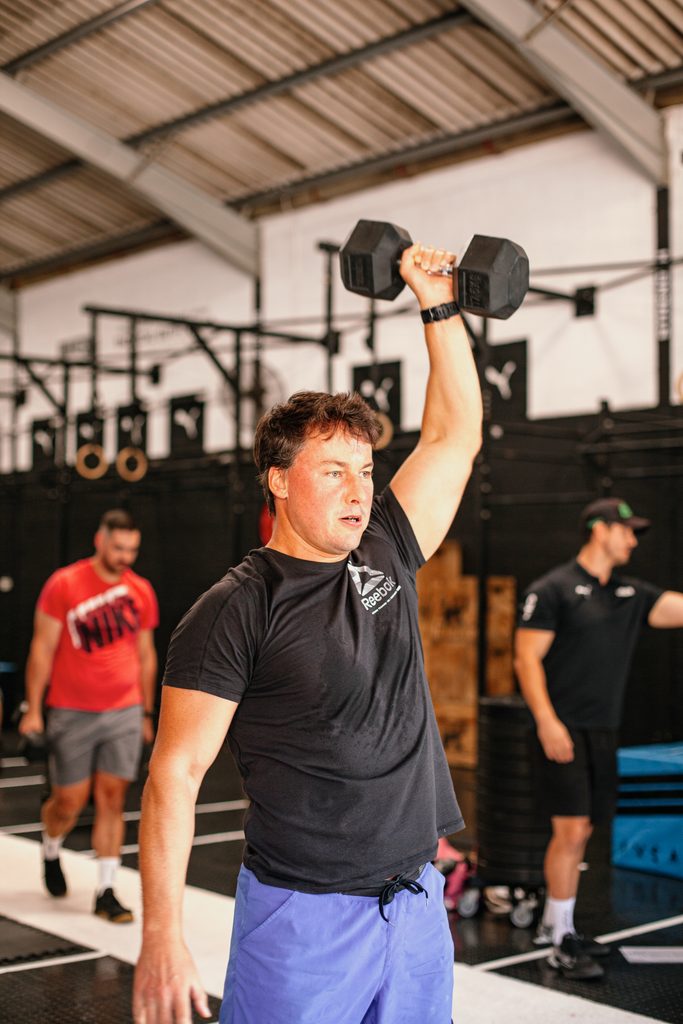
Jared credits 14 years of CrossFit at Valley Road with providing a strong physical foundation for his endurance training.
14. What Has Been the Biggest Challenge You’ve Faced?
Jared’s Answer
“Managing and overcoming the ‘beasterly’ winds on the bike leg. Headwinds can break and crush you mentally. I overcame this by shifting my mindset and perspective – instead of fighting the wind and over-exerting myself, I focused entirely on my power output and my heart rate, letting my mental resilience pull me through the slow miles.”
Coach Jarryd’s Take
Anyone who has spent time riding around Gqeberha knows exactly what Jared means.
But there’s a bigger lesson here.
You cannot control the conditions.
You can control your response.
Instead of trying to maintain a speed that the conditions won’t allow, Jared focuses on variables he can control.
That’s an important endurance lesson:
Don’t race the conditions. Race your plan.
15. What Is One Training Session Every Aspiring Triathlete Should Include?
Jared’s Answer
“The Brick Session (bike-to-run transition). Specifically, a long bike ride immediately followed by a 20-30 minute run. Your legs will feel like lead for the first kilometre/s – a sensation you need to experience and train your brain to handle before race day.”
Coach Jarryd’s Take
This is one of those sessions that looks simple on paper but teaches you something very specific.
Running after cycling feels different.
Your legs can feel heavy, your stride can feel unfamiliar and your brain can immediately tell you that something isn’t right.
That’s why brick training matters.
You’re not just training the body.
You’re practising the transition from one movement demand to another and learning how to manage the sensation rather than panic when it happens on race day.
16. What Nutrition and Hydration Advice Would You Give?
Jared’s Answer
“Use your long weekend sessions to test your fuel and how your body responds to it. Aim for 60–90 grams of easily digestible carbohydrates per hour – use a mix of carb/sports drinks, energy gels, or solid foods. Electrolyte (sodium) replacement is just as critical to avoid cramping.
On race day, never try anything new – stick to what you trained with and what you know works.”
Coach Jarryd’s Take
The most important part of this answer is probably the last sentence.
Race day is not the time to experiment.
Long training sessions should be used to work out what you can tolerate, how much fluid you need, what carbohydrate sources work for you and how you respond when training gets longer.
Jared’s 60–90g carbohydrate-per-hour range is a useful endurance-sport guideline, but individual tolerance varies. Nutrition should be practised progressively rather than suddenly jumping to a high intake.
If you’re preparing for a long-distance event, particularly if you have specific nutritional or medical considerations, individual advice from an appropriately qualified sports dietitian is worthwhile.
17. What Surprised You the First Time You Competed in an Ironman?
Jared’s Answer
“The race is a series of highs and lows. I expected a grueling physical test, but I didn’t expect the frequent waves of emotion and how drastically your state of mind can swing.”
Coach Jarryd’s Take
This is something I think people underestimate when they look at endurance events from the outside.
They see the distance.
They see the training.
They see the finish line.
But they don’t necessarily see the psychological experience in between.
Long events create enormous swings in confidence and emotion.
Learning that a bad patch doesn’t necessarily mean the race is going badly is an important mental skill.
Sometimes you simply need to keep moving and let the next phase of the race arrive.
18. What Are Your Top Three Tips for Someone Preparing for Their First Triathlon or Ironman?
Jared’s Answer
Consistency over intensity – Missing multiple workouts and trying to make up for them with one massive, exhausting weekend session will do more harm than good.
Master your transition logistics – Practice changing from swim-to-bike and bike-to-run beforehand so you don’t waste ‘mental energy’ in transition.
Protect your recovery – Sleep and nutrition are where the actual fitness gains happen.
Coach Jarryd’s Take
If I had to reduce Jared’s entire interview to three principles, these would probably be them.
Consistency creates the adaptation.
Preparation reduces unnecessary stress.
Recovery allows you to absorb the training.
People often focus on what they need to add to their programme.
Sometimes the biggest improvement comes from learning how to recover from what they’re already doing.
19. What’s Been Your Proudest Moment in the Sport So Far?
Jared’s Answer
“Running down the famous red carpet, hearing the announcer say the words “You are an Ironman!” , and crossing the finish line while my family cheered from the grandstands/sidelines for each of my Ironman.”
Coach Jarryd’s Take
For someone who hasn’t experienced it, it’s easy to think the finish line is the achievement.
But the finish line is really the final result of everything that happened before it.
The early mornings.
The long rides.
The uncomfortable runs.
The missed social events.
The sessions where motivation wasn’t there.
The training when the weather wasn’t perfect.
That’s what makes an endurance finish meaningful.
And having family there to witness it makes the moment even more special.
📸 IMAGE – IRONMAN FINISH
Best photo: Jared crossing the finish line or a genuine family/support photo.
Alt text: Jared Petzer crossing the Ironman finish line after his endurance training journey
20. Finally, If Someone Reading This Wants to Get Started Today, What Would Their Very First Step Be?
Jared’s Answer
“Go online and register for a short local event. Nothing cures procrastination faster than a confirmed race date on your calendar.”
Coach Jarryd’s Take
I think that’s the perfect place to finish.
Not with an 18-month training plan.
Not with an expensive bike.
Not with a list of 50 pieces of equipment.
With a date.
Pick an appropriate short-distance event.
Put it in the calendar.
Then start preparing.
Gqeberha has the advantage of hosting major multi-sport events, including the IRONMAN South Africa weekend at Hobie Beach. The event also includes shorter-distance opportunities, such as the 5150 and Corporate Triathlon Challenge, giving people different entry points into the sport.
The exact event, distance and entry requirements should always be checked on the organiser’s current website before registering.
How to Get Into Triathlon in Gqeberha: Jared’s Advice in One Place
If you’ve made it through all 20 questions, the path Jared describes is actually quite simple.
Start with what you already know.
If you’re a CrossFit member, keep building your strength and general fitness.
Develop the three disciplines.
Spend time swimming, cycling and running.
Build your aerobic engine.
Don’t turn every session into a race.
Find people to train with.
Use groups for consistency, safety and accountability.
Learn to train alone too.
Develop the mental skills required for longer events.
Start with a manageable race.
Don’t make your first event an unnecessarily huge challenge.
Learn your equipment.
Don’t buy everything before you know what you need.
Practise transitions.
Swim-to-bike and bike-to-run should become familiar.
Practise your nutrition.
Long training sessions are your testing ground.
Recover.
Sleep, nutrition and sensible training load matter.
Then progress.
Sprint.
Then perhaps 70.3.
Then, if you decide you want to go further, Ironman.
Can You Do CrossFit and Triathlon Together?
Jared is living proof that the two can coexist.
But they serve different purposes.
CrossFit can provide:
- Strength
- General conditioning
- Functional movement
- Midline strength
- Muscular resilience
- Variety
- Community
Swimming, cycling and running provide:
- Sport-specific endurance
- Technical swimming development
- Cycling-specific endurance
- Running economy
- Race-specific preparation
The amount of CrossFit you can maintain will depend on your triathlon goal and the stage of your training.
Someone preparing for a Sprint triathlon has very different requirements from someone building towards a Full Ironman.
The goal isn’t to see how much training you can cram into a week.
The goal is to find the minimum effective combination that allows you to progress while still recovering and functioning well in everyday life.
Why Gqeberha Is a Great Place to Start Triathlon
One of the biggest advantages for anyone interested in triathlon in Gqeberha is access to all three disciplines.
You have:
Swimming:
Ocean and pool options.
Cycling:
Coastal and inland routes.
Running:
Beachfront paths and established running routes.
And importantly, you have a local endurance community and major events happening in the area.
The official IRONMAN South Africa race is based around Hobie Beach, with the event forming part of the Nelson Mandela Bay sporting calendar. The official race information provides current course, registration and race-week information for athletes.
Useful official resources:
IRONMAN South Africa – Race Information
IRONMAN South Africa – Race Week Information
IRONMAN South Africa – Course Information
Frequently Asked Questions About Triathlon in Gqeberha
How do I get into triathlon in Gqeberha?
Start with one discipline at a time, build your swimming, cycling and running ability, find a supportive training group and consider entering a short-distance local event.
Can a beginner do a triathlon?
Yes. A beginner doesn’t need to start with an Ironman. A short-distance triathlon provides a much more manageable introduction to the sport.
Can I do CrossFit and triathlon together?
Yes. CrossFit can complement triathlon by maintaining strength and general physical fitness while swimming, cycling and running provide the sport-specific endurance training.
How many hours a week do I need for a Sprint triathlon?
Jared’s experience suggests approximately 4–6 hours per week as a broad guideline, although individual requirements vary.
How many hours do I need for a Half Ironman?
Jared suggests approximately 8–12 hours per week, with longer endurance sessions becoming increasingly important.
How many hours do I need for a Full Ironman?
Jared’s experience suggests approximately 12–18+ hours per week, particularly during peak training periods.
What is a brick workout?
A brick workout combines two disciplines consecutively, most commonly a bike ride immediately followed by a run.
Where can I train for triathlon in Gqeberha?
Jared recommends a combination of local pool and ocean swimming, suitable cycling routes and beachfront running paths. Beginners should prioritise safe conditions and build confidence gradually.
What equipment do I need for my first triathlon?
You can start relatively simply with swimming essentials, a reliable bicycle and helmet, and suitable running shoes. Specialist equipment can be added later.
Do I need to train alone?
No. Jared recommends a combination of group and solo training, using groups for accountability and safety while using some solo sessions to develop mental resilience.
Coach Jarryd’s Final Thoughts
What I enjoy most about Jared’s story is that it doesn’t start with an Ironman finish line.
It starts with curiosity.
He enjoyed swimming.
He enjoyed cycling.
He enjoyed running.
He trained CrossFit.
He watched friends taking part in local events and eventually decided to see what he could do himself.
Fourteen years later, that journey has included six Half Ironman finishes and three Full Ironman finishes.
But the lesson isn’t that everyone reading this should go and sign up for an Ironman.
It’s that you don’t necessarily know what you’re capable of until you give yourself the opportunity to find out.
Maybe your first goal is a 5km run.
Maybe it’s learning to swim properly.
Maybe it’s getting comfortable on a bike.
Maybe it’s your first Sprint triathlon.
And maybe, one day, you’ll find yourself standing on an Ironman start line.
That’s the beauty of fitness.
You don’t have to know exactly where the journey is going to take you.
You just need to take the first step.
And if you’re sitting in Gqeberha thinking about getting into triathlon, Jared’s advice is probably the best place to start:
Put a race date on the calendar.
Then start working towards it.
Coach Jarryd
CrossFit Valley Road | Gqeberha, South Africa
Coach Jarryd has been coaching CrossFit for more than 10 years and is passionate about helping everyday people discover what they are capable of. Through CrossFit Valley Road, he has helped hundreds of members improve their health, build confidence, develop strength, and achieve goals they once thought were out of reach.
His coaching philosophy remains simple:
Build fitness for life first, and performance will follow.
About CrossFit Valley Road
CrossFit Valley Road | Gqeberha, South Africa
CrossFit Valley Road has been a CrossFit affiliate for more than 10 years, helping everyday people build strength, fitness, confidence and healthier lifestyles.
Our members train for many different reasons.
Some want to improve their health.
Some want to become stronger.
Some want to lose weight.
Some want to prepare for HYROX, running events, triathlons or endurance challenges.
And many simply want to become fitter and more capable for everyday life.
Our philosophy is simple:Build fitness for life, and give people the confidence to take on whatever challenge comes next.